
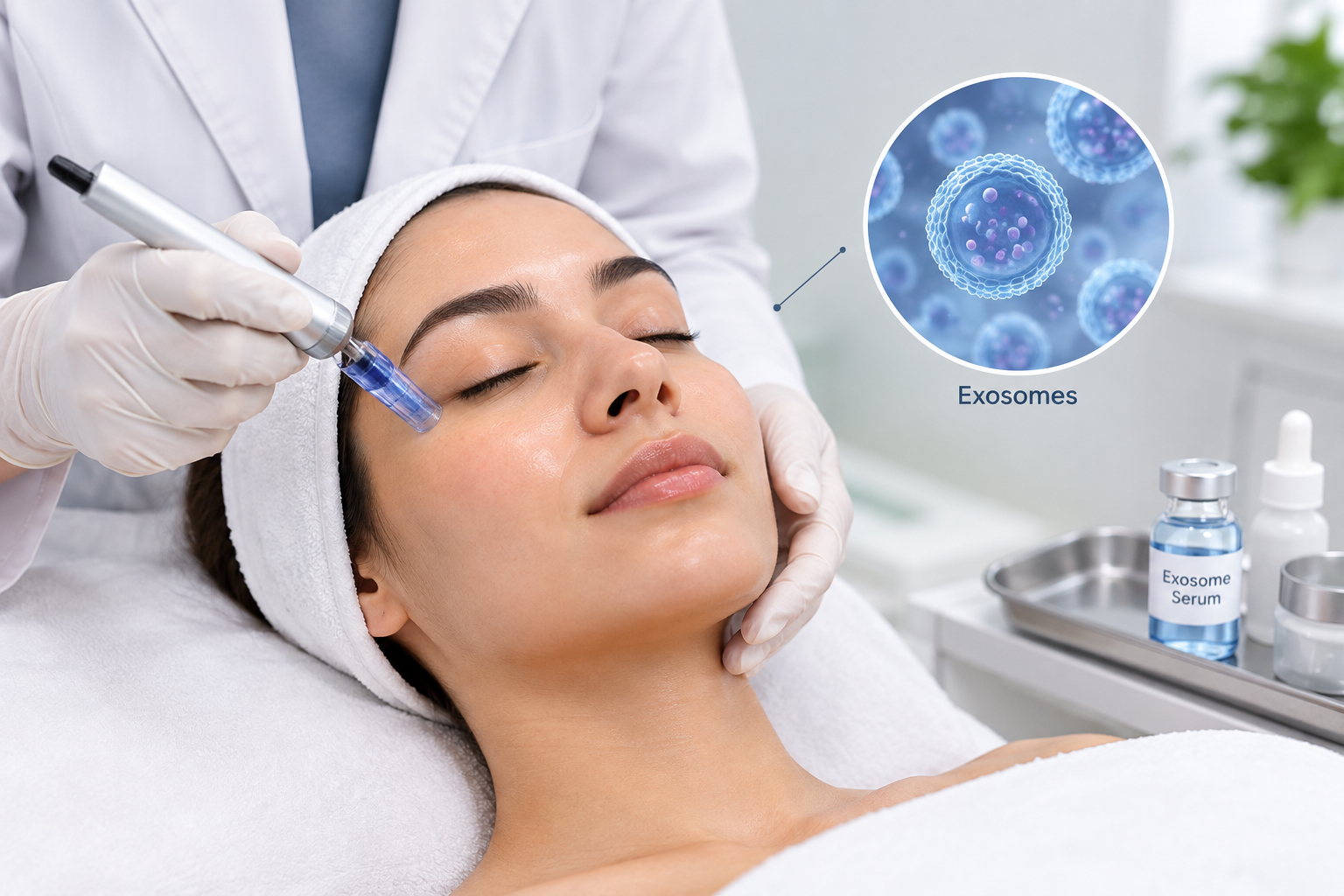
Exosome Skin Care Treatment: How It Works, Benefits, and What to Know Before You Try It
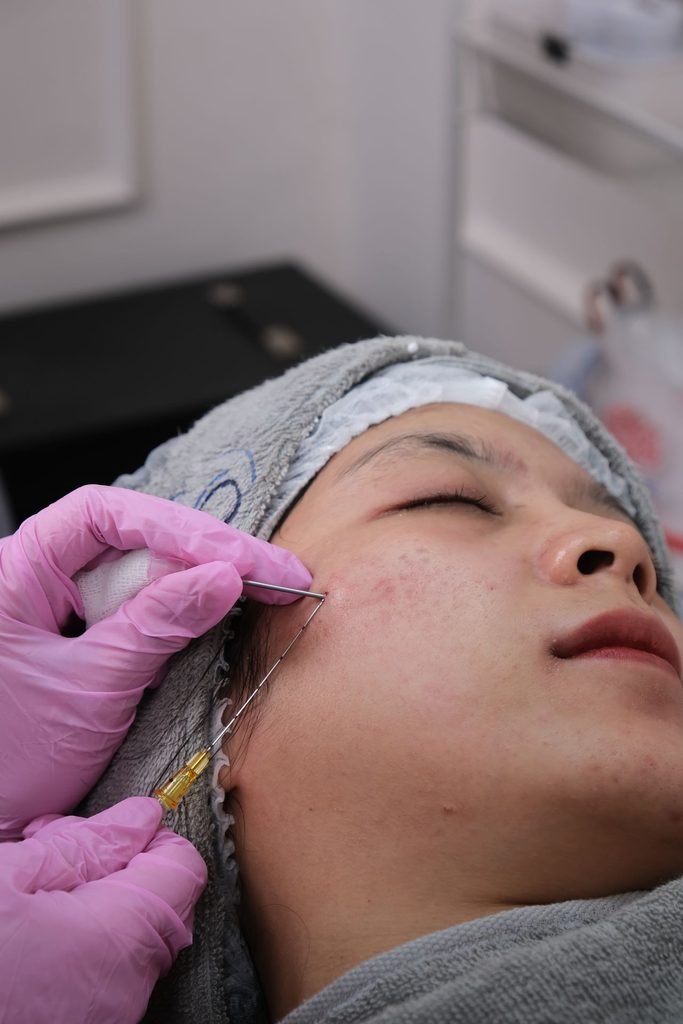
Exosome Skin Care Treatment is an emerging approach being studied for improving skin texture, hydration, and overall skin quality.
Exosome skin care treatment has become a popular topic in cosmetic dermatology, especially alongside microneedling, laser procedures, and other regenerative skin treatments.
If you spend any time in skincare or med-spa circles, you’ve probably seen “exosomes” show up next to microneedling, under-eye treatments, and anti-aging facials. It’s one of the buzziest ingredients in regenerative skincare right now — and also one of the most misunderstood.
Exosome skin care treatment involves applying or injecting tiny, cell-derived particles that carry proteins and genetic signals believed to support collagen production, calm inflammation, and speed up skin repair. Unlike stem cells, exosomes aren’t living cells — they’re more like biological messages that tell your existing skin cells to work harder.
How Does Exosome Skin Care Treatment Work?
Exosomes are microscopic particles — typically 30 to 150 nanometers, far smaller than a single cell — that cells naturally release as part of everyday communication. They carry a payload of proteins, lipids, and genetic material (mRNA and microRNA) to nearby cells.
Where Exosomes Come From
In skincare, the exosomes used in treatments are usually harvested from laboratory-cultured mesenchymal stem cells, then purified and separated from the parent cells.
Exosomes Are Not Stem Cells
What ends up in the vial or serum is the exosome cargo alone — no living stem cells, and nothing capable of dividing or growing into new tissue. An exosome doesn’t rebuild your skin directly; it delivers a set of instructions, and your own skin cells decide what to do with them.
Why This Distinction Matters
This is the point most marketing glosses over: a “signal” is only as useful as the tissue receiving it. Skin has abundant, active cells capable of responding — part of why exosomes are studied here more than in tissues with limited regenerative capacity.
A Quick Way to Remember It
Think “messenger, not builder.” The exosome delivers the note; your own cells do the work.
How Does Exosome Skin Treatment Work?
The proposed process works in a few steps:
- Exosomes are applied to the skin (via serum, microneedling, or injection).
- Nearby skin cells absorb the vesicles.
- The proteins and RNA inside are released into those cells.
- Cell signaling shifts, potentially affecting collagen production, inflammation, and repair.
The Role of Fibroblasts
The main target cell in skin is the fibroblast, which produces the collagen and elastin responsible for firmness and elasticity.
Collagen and Elastin Activity
Laboratory and early clinical studies suggest that certain exosome formulations may stimulate fibroblast activity, which is the biological rationale behind claims about improved texture, fine lines, and post-procedure healing.
A Gradual Process, Not an Instant One
Because this is a signaling process rather than an immediate physical change, results build over weeks, not days.
What This Means Day to Day
Don’t expect a visible difference the morning after a session — the changes happening are cellular, not cosmetic-instant.
Exosome Injections vs. Topical Serums vs. Microneedling + Exosomes
Not all “exosome treatments” are the same procedure, and the delivery method changes both the science and the regulatory picture.
| Method | How it’s delivered | What it’s used for |
|---|---|---|
| Direct injection | Injected into the dermis or scalp | Deeper skin renewal, hair thinning |
| Microneedling + exosomes | Applied over microchannels created by needling | Facial rejuvenation, post-procedure recovery |
| Topical serum | Applied to intact skin surface | At-home or in-office maintenance, added glow |
Direct Injection
Delivers exosomes directly into tissue, but falls under stricter biological-product rules than a cosmetic serum does.
Microneedling + Exosomes
Popular because microneedling itself already triggers collagen production. That overlap makes it genuinely difficult to know how much of any visible improvement comes from the exosomes versus the needling.
Topical Serums
Faces a basic biology problem: the skin barrier is designed to keep particles out, so how much of a topical exosome serum actually penetrates intact skin depends heavily on the formulation.

What Are the Benefits of Exosome Skin Care Treatment?
Based on current research and clinical use, the potential benefits being explored include:
- Improved skin texture and smoothness
- Softer fine lines
- Better hydration and radiance
- Support for collagen and elastin activity
- Faster recovery after procedures like laser or microneedling
- Some improvement in the appearance of acne scars
A Note on Evidence
These are potential benefits under investigation, not guaranteed outcomes. The strength of evidence varies by product, delivery method, and what’s being treated.
Is Exosome Skin Treatment Safe? Side Effects and Risks
Common, Mild Reactions
Most people experience only mild, short-lived reactions at the treatment site:
- Redness
- Swelling
- Bruising
- Tenderness
- Small injection marks (if injected)
These typically resolve within a few days.
More Serious Risks
More serious complications have been reported, almost always tied to unregulated or poorly sourced products rather than the biology of exosomes themselves. Reported issues include persistent inflammation, firm nodules, infection, and scarring.
Why Product Quality Is the Real Variable
This is the single biggest safety factor in exosome treatments: it isn’t really about whether exosomes “work,” it’s about what is actually inside the product being used on you.
Questions Worth Asking Before Treatment
- What is the exact product name and manufacturer?
- What cell source were the exosomes derived from?
- Is this specific product authorized for the delivery method being used (topical vs. injection)?
- How is it tested for sterility and contamination?
A Simple Rule of Thumb
If a provider can’t answer these clearly, that’s a red flag — regardless of how the treatment is marketed.
Is Exosome Skin Treatment FDA-Approved?
No exosome product is currently FDA-approved for treating any condition in the United States, cosmetic or medical. The FDA has issued multiple warning letters to companies marketing exosome products, stating that these products meet the legal definition of unapproved drugs or unlicensed biological products.
Science vs. Approval
This doesn’t mean the underlying science is fake — exosome research is a legitimate and active area of biomedical study. It means that scientific promise and regulatory approval are two different things. Regulations differ outside the U.S., so ask specifically about the legal status of the exact product and delivery method wherever you’re being treated.
Exosome Skin Treatment vs. PRP: Which Is Better?
Platelet-rich plasma (PRP) is the more established comparison point, since it’s been used in aesthetics for over a decade.
| Exosome treatment | PRP | |
|---|---|---|
| Source | Lab-cultured donor cells | Your own blood |
| Contains | Signaling vesicles (proteins, RNA) | Concentrated platelets and growth factors |
| Evidence base | Emerging, more limited | Larger, more established |
| Regulatory status | No FDA-approved exosome injectable | Established autologous procedure |
| Typical cost | Usually higher | Usually lower |
Which Should You Choose?
PRP currently has the stronger track record and clearer regulatory footing. Exosome treatment is a newer approach with promising early signals, but it hasn’t caught up to PRP in either evidence or oversight. Neither option is automatically the better choice — it depends on the concern being treated, your provider’s experience, and your comfort with a newer, less-regulated category.
What to Expect: Timeline, Sessions, and Results
How Fast Do Results Show Up?
Results from exosome skin treatment are gradual. Early changes in hydration and glow may appear within a couple of weeks, while texture and fine-line improvements tend to develop over one to three months.
How Many Sessions Are Typical?
Most treatment plans involve a short series of sessions, often spaced several weeks apart, rather than a single visit. There’s no standardized protocol across providers, since products, concentrations, and delivery methods vary widely.
Who Should Consider It — and Who Shouldn’t
Good Candidates
- Early-to-moderate signs of skin aging (fine lines, dullness, uneven texture)
- Acne scarring or post-inflammatory marks
- A preference for minimally invasive options with limited downtime
- Realistic expectations of gradual, not dramatic, change
Who Should Avoid It
Generally not appropriate during pregnancy or breastfeeding, over active infection or open wounds, or as a substitute for treatments that address more significant skin laxity — exosomes don’t add volume or physically lift skin the way fillers or surgical options can.
Is It Worth It?
That depends on what you’re solving for. If your goal is a gradual improvement in skin quality with low downtime, and you’re working with a provider who can be specific and transparent about the exact product being used, exosome skin treatment may be a reasonable option to explore. If you’re expecting dramatic, guaranteed, or long-lasting transformation, it’s worth going in with tempered expectations — this is still an emerging, largely unregulated category.
Before choosing Exosome Skin Care Treatment, it is important to understand the specific product, delivery method, available evidence, and potential risks.
FAQs About Exosome Skin Care Treatment
Are exosome facials the same as exosome injections?
No. Exosome facials typically apply a topical serum, often after microneedling to help it penetrate, while injections deliver exosomes directly into the skin.
How long do Exosome Skin Care Treatment results last?
Results vary by individual and product, but aesthetic skin improvements are commonly reported to last around six to nine months before fading, especially without maintenance sessions.
Do exosome treatments hurt?
Topical and microneedling-based exosome treatments generally cause mild, temporary discomfort similar to microneedling itself. Injections may cause more noticeable but still short-lived tenderness, redness, or bruising.
Can exosomes replace Botox or fillers?
No. Exosomes are aimed at improving overall skin quality — not at relaxing muscles like Botox or adding volume like fillers.
Is exosome skin treatment regulated?
No exosome product currently has FDA approval for cosmetic or medical use in the U.S., and the FDA has issued warning letters to several manufacturers. Regulation varies by country.
How much does exosome skin treatment cost?
Costs vary widely by provider, region, and whether it’s combined with microneedling or laser. Ask for exact pricing during a consultation, since there’s no standardized fee.
Who shouldn’t get exosome skin treatment?
People who are pregnant or breastfeeding, have active skin infections or open wounds in the treatment area, or want volume restoration or significant lifting.
Is exosome skin treatment better than PRP?
Not automatically. PRP has a longer track record and clearer regulatory standing, while exosome treatment is newer with promising but less established evidence.
Can exosome treatment cause an allergic reaction?
It’s possible, though uncommon with properly sourced products. Because exosomes are cell-derived, an immune response is a theoretical risk — one more reason product traceability matters.
In the United States, the FDA states that there are currently no FDA-approved exosome products. Anyone considering an exosome treatment should understand the regulatory status of the specific product and delivery method being used.
Benefits of Pomegranate for Skin – Natural Glow & Anti-Aging Secrets
K-Beauty Glass Skin Trend: Why South Korea Still Rules Global Skincare
2 thoughts on “Exosome Skin Care Treatment: How It Works, Benefits, and What to Know Before You Try It”