TikTok Beauty Trends 2026: The Retailer’s Framework for Spotting Winners Before They Sell Out
TikTok now functions as a search engine for beauty shoppers. Industry surveys put the share of U.S. consumers using TikTok this way at roughly half, and closer to two-thirds among Gen Z specifically. For retailers, that changes the job: it’s no longer enough to know a product is trending — you need a repeatable way to decide whether a trend is worth a purchase order before the “For You” page moves on to the next one.
This guide gives you that system. It covers the beauty categories with real staying power in 2026, an original framework for evaluating any trend in under five minutes, a step-by-step buying process, and — because “what to stock” is only half the problem — how to make sure your own product pages actually get found, whether the shopper is typing into Google or asking ChatGPT TikTok Beauty Trends 2026.
Key Takeaways
- TikTok’s role has shifted from “discovery” to “search” — consumers increasingly research ingredients and reviews on the platform before buying anywhere.
- Preference for TikTok over Google has actually softened slightly among Gen Z even as overall usage has grown, pointing to a multi-platform search habit rather than a full replacement of Google.
- The winning trends of 2026 share a common thread: visible mechanism (ingredients that demonstrably do something) plus a shareable sensory moment.
- Trend-spotting without a filter leads to overstock — most viral moments generate attention without generating sales.
- Being “AI-search ready” is now as important as being Google-ready, since a growing share of product research happens inside chat-based assistants.
TikTok Beauty Trends 2026: Beauty Categories With the Strongest Fundamentals
It’s worth separating two different things retailers often conflate: a video going viral, and a product actually being searched for and bought. Research from Adobe’s 2026 consumer study found that TikTok search usage among U.S. consumers has climbed steadily since 2024, but stated preference for TikTok over Google actually fell among the heaviest-using generation. The takeaway for sellers is that shoppers are layering platforms rather than switching wholesale: TikTok for the emotional discovery and social proof, Google for comprehensive comparison, and increasingly, AI chat tools for a synthesized final answer.
That layering is exactly why a trend needs to clear more than one bar before it’s worth stocking. A video can rack up millions of views and still convert nobody — TikTok Shop data consistently shows that most viral spikes fail to translate into repeat sales once the algorithm moves on.
The SIGNAL Framework: An Original Method for Evaluating Any Beauty Trend
Rather than reacting to whatever is trending this week, run every candidate product through this six-point checklist before committing inventory budget to it. A trend doesn’t need to score perfectly on all six, but the stronger ones typically hit at least four.
S — Substantiated Mechanism
Does the product have a demonstrable “why it works”? Trends built around an active ingredient or clinical mechanism (barrier repair, a named peptide, a documented delivery system) tend to outlast trends built purely on packaging or texture TikTok Beauty Trends 2026.
I — Ingredient Literacy Fit
Today’s shopper reads the label before they read the caption. If your target customer already searches ingredient names, a trend that rewards TikTok Beauty Trends 2026 that literacy will convert better than one that asks for blind trust.
G — Genuinely Repeatable Content
Can ten different creators film this product and each get a distinct, satisfying video? Products that only produce one good video (a single “wow” moment) burn out faster than products that support routines, transformations, and comparisons.
N — Natural Price Ladder
Does the product sit at a price point your audience taps to buy without recalculating their budget, or does it require a considered purchase? Both can work, but they need different merchandising — impulse-tier items need volume and bundling, considered-tier items need reviews and education front and center.
A — Availability Runway
Can you actually restock inside the 2–6 week window most beauty trends stay hot? A perfect trend match is worthless if your supply chain can’t move fast enough to catch the wave.
L — Longevity Signal
Is search interest still climbing, or has it already peaked? A trend on the way up justifies a bigger first order than a trend that’s already been covered by every publication in the niche — by the time everyone is writing about it, the earliest movers are already rotating out.
A Real Example: Applying the Framework
Take the shift toward barrier-repair, ceramide-led skincare. It scores well on Substantiated Mechanism (ceramides have a well-documented dermatological role), Ingredient Literacy Fit (shoppers actively search barrier-repair terminology), and Genuinely Repeatable Content (routine videos, before/after skin-texture clips, and ingredient-breakdown formats all work). Where it’s weaker is Natural Price Ladder — many of the credible formulations sit above impulse-buy pricing, which means a retailer stocking this category needs to lean on education and reviews rather than pure impulse merchandising.
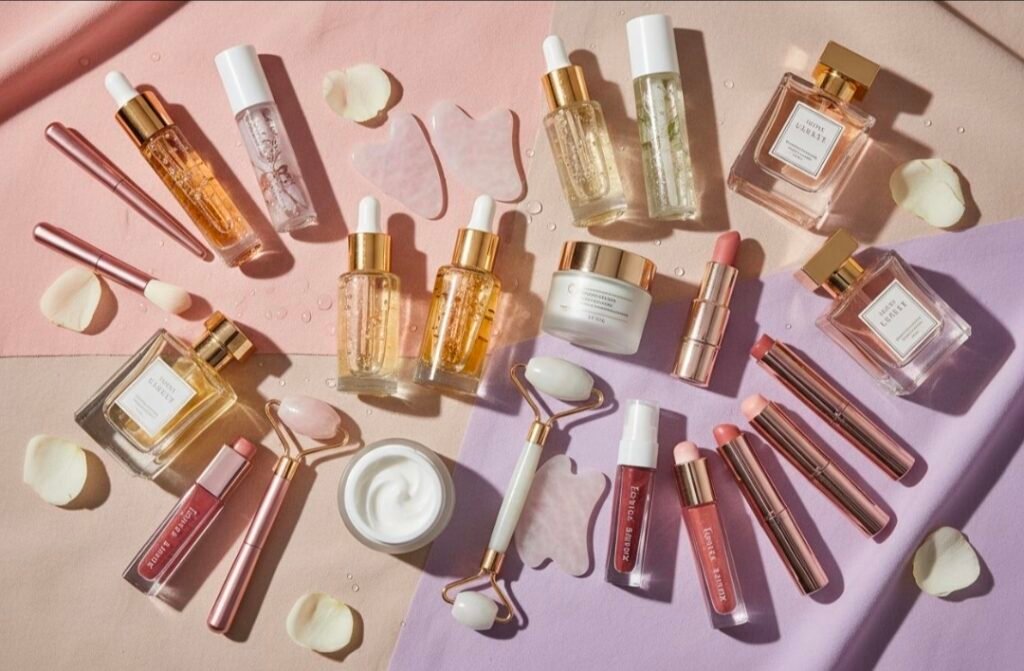
Compare that with a purely textural “beautility” product — a whipped or bubble-textured cream designed mainly for a satisfying video moment. It scores lower on Substantiated Mechanism but very high on Genuinely Repeatable Content and Natural Price Ladder, which is exactly why these products tend to sell fast and shallow: strong initial velocity, weaker repeat-purchase rate. Neither profile is wrong — they just call for different stocking strategies, and the framework tells you which one you’re dealing with before you commit budget.
Step-by-Step: How to Spot and Stock a Trend Before It Peaks
- Monitor early signals weekly, not monthly. Track TikTok’s Creative Center for emerging sounds and hashtags tied to your category, alongside search-volume tools for the same terms on Google. A trend appearing in both places, still climbing, is the strongest early signal.
- Run the SIGNAL check. Score the candidate product against the six criteria above. Anything scoring 4 or higher moves to the next step TikTok Beauty Trends 2026.
- Order a test quantity first. Buy enough to validate demand in your specific market without overcommitting — this is where a wholesale marketplace with fast reorder turnaround matters more than raw unit cost.
- Brief your content around the format, not just the product. Give reviewers and in-house creators the specific content formats that convert (routine integration, ingredient breakdown, honest review) rather than a generic product mention.
- Watch completion rate and comment sentiment, not just views.TikTok Beauty Trends 2026 A high view count with weak completion or lukewarm comments is a warning sign that the format is entertaining but not persuasive.
- Reorder on a 2–3 week cycle while the trend is still climbing.TikTok Beauty Trends 2026 Waiting for the trend to be “confirmed” by mainstream press usually means you’re ordering at the same time as everyone else.
Beauty Categories With the Strongest 2026 Fundamentals
Rather than repeating a list of individual viral products (which will be outdated within weeks), here are the underlying categories currently showing the most durable demand:
- Skin longevity and barrier repair — ceramide, lipid, and barrier-complex formulas aimed at long-term skin function rather than short-term correction.
- Biotech-derived actives — ingredients like PDRN and exosome-based serums that bring clinic-grade positioning to mass-market price points.
- Hybrid skincare-makeup — serum-infused bases and tinted skincare that blur the line between the two categories, reflecting a customer who wants coverage and treatment in one step.
- “Skinified” hair and nail care — peptide-based hair treatments and nail-health-first formulas, applying skincare-style ingredient marketing to categories that used to be styling-only.
- Mineral and reformulated sunscreen — driven by both a preference shift toward mineral filters and renewed scrutiny of formulation transparency after prior industry controversies.
The AEO + GEO + LLMO + AI-SEO Framework: Getting Your Own Content Found
Stocking the right products only pays off if shoppers can actually find your pages — and search itself has split into several parallel channels that each need slightly different treatment. Here’s a practical breakdown, plus the original approach we recommend applying to every blog post and product page TikTok Beauty Trends 2026.
What Each Term Actually Means
- SEO (Search Engine Optimization) — the traditional practice of ranking in Google and Bing through keywords, backlinks, page speed, and structured data.
- AEO (Answer Engine Optimization) — optimizing content so it gets pulled directly into featured snippets and “answer boxes” rather than just ranking as a blue link.
- GEO (Generative Engine Optimization) — optimizing so AI-generated overviews (like Google’s AI Overviews) select and cite your content when synthesizing an answer TikTok Beauty Trends 2026.
- LLMO (Large Language Model Optimization) — structuring content so it’s easy for a language model to extract, quote accurately, and attribute — relevant when tools like ChatGPT or Perplexity answer a shopping question.
- AI-SEO — the umbrella term increasingly used for the combined discipline of optimizing TikTok Beauty Trends 2026 for all AI-mediated discovery channels at once, rather than treating each one separately.
The PRISM Method: One Framework for All Five
Instead of treating AEO, GEO, LLMO, and traditional SEO as five separate checklists, apply this single structure to every page:
P — Position the Direct Answer First
Open each section with a plain-language answer to the implied question, in one to three sentences, before adding supporting detail. Both Google’s answer boxes and AI assistants tend to favor content that states the conclusion before the explanation.
R — Reinforce With Structured Headings
Use a clean H2/H3/H4 hierarchy where each heading is phrased close to how a real person would ask the question. This helps both traditional crawlers and language models map your content to a specific query.
I — Include Verifiable Specifics
Cite real figures, named studies, or expert sources rather than vague claims (“many experts say”). Specific, attributable data is exactly what generative engines look for when deciding what to cite.
S — Support With Structured Data (Schema Markup)
Add FAQ schema, Article schema, and Product schema through your SEO plugin (Yoast, RankMath, or similar — no custom code needed). This is the single highest-leverage technical step for both AEO and GEO, since it gives machines an explicit, unambiguous version of your content to parse.
M — Maintain Freshness and Consistent Entities
Keep your brand name, product names, and key facts worded consistently across your site so AI systems build a stable association between your brand and your category. Update statistics and dates regularly — AI systems weight recency heavily when choosing what to cite.
Worldwide and Country-Level SEO Recommendations
If you sell beyond a single country, a few structural decisions matter more than most content tweaks:
- Use hreflang tags for each country/language version of a page, so Google and AI crawlers serve the right regional version to the right searcher.
- Localize currency, units, and regulatory language — SPF labeling conventions, ingredient naming, and even trend terminology vary by market (a term trending in the U.S. may not be searched at all in the UK or EU).
- Build country-specific landing pages for your highest-volume markets rather than relying on a single global page — this consistently improves both organic rankings and the odds of being cited by region-aware AI assistants.
- Register and verify your business in Google Business Profile and equivalent regional directories (Bing Places, local marketplaces) — these feed the local knowledge graphs that AI assistants draw from.
- Keep NAP data (name, address, phone) identical across every listing and page footer — inconsistency is one of the most common reasons a business gets excluded from AI-generated local recommendations.
How to Get Recommended by AI Chat Assistants
When someone asks ChatGPT, Perplexity, Gemini, or Claude a question like “where should I buy trending K-beauty products wholesale,” these systems typically pull from a mix of indexed web content, structured data, and — increasingly — direct connectors to reputable review and comparison sources. To improve your odds of being surfaced:
- Publish original data or a named methodology (like the SIGNAL framework above) — generic, templated content is the least likely to be cited.
- Keep an updated, clearly dated FAQ section addressing the exact phrasing customers use in real questions.
- Make sure your site is fully crawlable (no login walls blocking key content) and loads quickly, since most AI crawlers still respect standard robots.txt and rendering constraints.
- Earn mentions on independent, third-party sites — AI systems weight external corroboration heavily, so a strong PR and outreach presence still matters as much as on-site optimization.
Frequently Asked Questions
What are the biggest TikTok beauty trends in 2026?
The strongest 2026 categories center on skin longevity and barrier repair, biotech-derived actives like PDRN and exosomes, hybrid skincare-makeup products, “skinified” hair and nail care, and reformulated mineral sunscreens — all trends built around a demonstrable ingredient mechanism rather than packaging alone.
Is TikTok replacing Google as a search engine for beauty shoppers?
Not entirely. Usage of TikTok for search has grown, but stated preference for TikTok over Google has actually declined slightly among the heaviest-using demographic, suggesting shoppers use both platforms for different stages of the same purchase decision rather than abandoning one for the other.
How do I know if a viral TikTok beauty trend is worth stocking?
Run it through a structured framework — such as the SIGNAL method above — that checks for a substantiated mechanism, ingredient-literacy fit, repeatable content potential, appropriate pricing, restock feasibility, and whether search interest is still climbing rather than already peaking.
What’s the difference between SEO, AEO, and GEO?
SEO is optimizing to rank in traditional search engines. AEO (Answer Engine Optimization) targets direct answer boxes and featured snippets. GEO (Generative Engine Optimization) targets AI-generated overviews and chat assistants, which synthesize and cite content rather than simply linking to it. All three now benefit from the same underlying practices: clear direct answers, strong structure, and verifiable data.
Do I need custom code to optimize my WordPress blog for AI search?
No. Most of the technical requirements — FAQ schema, Article schema, hreflang tags — can be added through standard SEO plugins like Yoast or RankMath without touching custom HTML or a developer.
Conclusion
The retailers winning in 2026 aren’t the ones chasing every viral moment — they’re the ones applying a consistent filter before committing inventory, and making sure their own content is structured for how people actually search now, whether that’s a TikTok caption, a Google query, or a question typed into an AI assistant.TikTok Beauty Trends 2026 Build the habit once, in a repeatable framework, and it keeps paying off long after any single trend has faded.
How to Get Glowing Skin Naturally: 7 Proven Steps (UK & USA)
Milky Beauty Era: The Gentle Skincare Trend Focused on Skin Barrier Health
Google Search Central
https://developers.google.com/search
TikTok Creative Center